
10 Best Trading Books Every Trader Must Read (Beginner to Advanced)
Stockeens

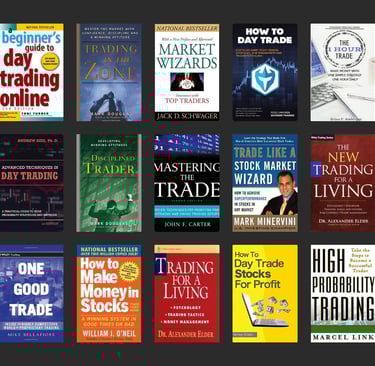
Top 10 Trading Books Every Trader Must Read
Learning trading from the markets alone can take years. One of the fastest ways to improve your understanding of the stock market is by learning from experienced traders and investors who have already spent decades studying market behaviour.
Many legendary traders have shared their knowledge through books, explaining how markets work, how traders think, and how to approach trading with discipline.
In this article, we will look at some of the best trading books every trader must read to develop a deeper understanding of the stock market.
1. Trade Like a Stock Market Wizard – Mark Minervini
This book is considered one of the best modern trading books for traders who want to understand how professional traders identify strong stocks.
Mark Minervini, a U.S. investing champion, explains how he finds high-performing stocks and manages trades with discipline.
Key lessons from the book include:
Identifying strong stocks with momentum
Understanding proper trade entries
Managing risk effectively
Developing a professional trading mindset
This book is widely recommended for traders interested in growth stocks and momentum trading.
2. How to Make Money in Stocks – William J. O’Neil
This classic book introduces the famous CAN SLIM investing strategy, which focuses on identifying strong companies with high growth potential.
William O’Neil explains how successful investors identify leading stocks and why certain companies outperform the market.
Important concepts covered include:
Understanding market trends
Identifying leading stocks
Recognizing institutional demand
Using charts to analyze stocks
Many traders consider this book one of the foundations of modern stock market investing.
3. Swing Trading Simplified – Ankur Patel
This book provides a structured introduction to swing trading strategies.
It explains how traders can capture short-term price movements in stocks that typically last for several days or weeks.
Key topics include:
Understanding swing trading concepts
Identifying trading opportunities
Managing trades effectively
Developing a disciplined trading routine
For beginners interested in swing trading, this book offers a straightforward introduction to the topic.
4. Trading in the Zone – Mark Douglas
Trading success is not only about strategy; psychology plays a crucial role.
In this book, Mark Douglas explains how emotions such as fear, greed, and overconfidence affect trading decisions.
Major lessons include:
Developing the right trading mindset
Controlling emotional decision making
Understanding probabilities in trading
Building consistency in trading performance
Many professional traders consider this book essential for understanding trading psychology.
5. Momentum Masters – Mark Minervini, David Ryan & Dan Zanger
This book is a collection of interviews with some of the most successful momentum traders.
The traders share their experiences, trading philosophies, and strategies used to achieve consistent market success.
Readers can learn:
How professional traders analyze markets
Different approaches to momentum trading
Risk management techniques used by experts
The book offers valuable insights into how top traders think and operate in real markets.
6. Think & Trade Like a Champion – Mark Minervini
This book focuses on the mindset and discipline required for successful trading.
Mark Minervini explains how traders can develop the habits, routines, and mental frameworks necessary to perform consistently in the markets.
Topics include:
Professional trading mindset
Discipline and preparation
Developing a structured trading routine
Continuous improvement as a trader
It is particularly useful for traders who want to improve their consistency and trading discipline.
7. How I Made $2,000,000 in the Stock Market – Nicolas Darvas
This classic trading book tells the story of Nicolas Darvas, who turned a modest investment into millions through disciplined trading.
Darvas explains his famous box theory, which helped him identify stocks making strong upward moves.
Key takeaways include:
The importance of following price movements
Identifying strong market trends
Avoiding emotional decision making
Despite being written decades ago, the lessons remain relevant for modern traders.
8. Stan Weinstein's Secrets for Profiting in Bull and Bear Markets
This book introduces the famous stage analysis concept, which explains how stocks move through different phases over time.
Stan Weinstein explains how traders can identify strong stocks entering powerful trends and avoid weak stocks.
Important lessons include:
Understanding stock market cycles
Identifying strong and weak stocks
Recognizing early stages of major trends
This book provides a deeper understanding of market structure and long-term trends.
9. How to Trade in Stocks – Jesse Livermore
Jesse Livermore is one of the most legendary traders in stock market history.
This book explains many of the principles he followed while trading the markets.
Readers learn about:
Market timing concepts
Price movement behaviour
Patience and discipline in trading
The ideas in this book have influenced many modern traders.
10. Best Loser Wins – Tom Hougaard
This book focuses on the psychology and mindset required to succeed in trading.
Tom Hougaard explains that successful traders are not those who avoid losses entirely, but those who manage losses effectively and stay disciplined.
Major lessons include:
Accepting losses as part of trading
Developing emotional control
Improving decision making under pressure
This book provides practical insights into the mental challenges traders face.
👉 LINK TO BUY ALL THE ABOVE MENTIONED BOOKS - https://tr.ee/r2A4pu
Final Thoughts
Reading trading books can significantly accelerate a trader's learning process. These books provide insights from experienced traders who have spent years understanding how markets behave.
While no book alone can make someone a successful trader, learning from these resources can help traders build a strong foundation in market behaviour, trading psychology, and disciplined decision making.
Combining knowledge from these books with real market observation can greatly improve a trader’s understanding of the stock market.